Picture of the Week #30


Gemini VII capsule at the National Air and Space Museum Steven F. Udvar-Hazy Center. September 2006.

From the information plaque:
Frank Borman and James A. Lovell Jr. lifted off aboard Gemini VII on December 4, 1965. Their primary mission was to show that humans could live in weightlessness for 14 days, an endurance record that stood until 1970. Their spacecraft also served as the target vehicle for Gemini VI-A, piloted by Walter M. Schirra Jr. and Thomas P. Stafford, who carried out the world's first space rendezvous on December 15. These two achievements were critical steps on the road to the Moon.
Picture of the Week #29


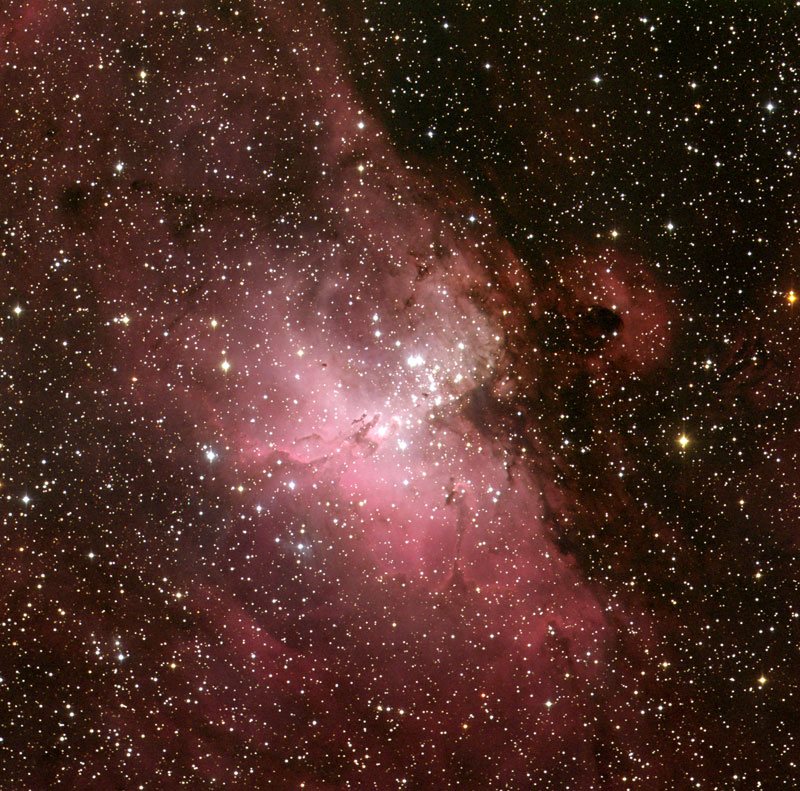
The Eagle Nebula (M16) taken with the Prime Focus Camera on the 30-inch telescope at McDonald Observatory in 1998 (AASTRA participants took the images and then I combined them into the final color image you see here).

Picture of the Week #27


The Austin Skeptics Society celebrated the 200th birthday of Charles Darwin last Thursday. The cake was courtesy of Taysia and the Darwin finger puppet is mine (from the Darwin exhibition at the American Museum of Natural History in NY in 2006).

Picture of the Week #26


Hall of Saurischian Dinosaurs, American Museum of Natural History, August 2006. T-Rex in foreground and Apatosaurus in the background.

I figured that some of the largest things to ever roam the planet was a good way to celebrate the 200th birthday of Charles Darwin, along with my favorite quote from On the Origin of Species (which was published 150 years ago this year):

... whilst this planet has gone cycling on according to the fixed law of gravity, from so simple a beginning endless forms most beautiful and most wonderful have been, and are being evolved."

Picture of the Week #25


Pluto, July 1997. 30-inch telescope at McDonald Observatory

This is a stack of 4 images taken over a 5 day period. If you look to the bottom of the frame, you will see 4 dots - red, green, blue and yellow, each representing Pluto on a different night. Three look regularly spaced with the red dot is further away. There would have been a spot between the red and green, but that night was cloudy, so no observation was made.


How the composite image was made:

If you look at the upper left and lower right corners, you will see two bright stars, which helped to find the field in each of the images. I took three of the frames and pulled them into Photoshop, each in a different channel. When the star images lined up, they appeared white, but the object that was different on each of the frames (Pluto), appeared as a red, green and blue dot from the object's image in each of the channels.

The fourth image was stacked (as a greyscale) over the combined image from above. The two images were added, and the fourth image of Pluto was hand-colored yellow.

News via computer in 1981


I think the most awesome part of the video is the line "the approximate 2 to 3 thousand home computer owners it the Bay Area".

Picture of the Week #24


Part of the Veil Nebula taken with the Prime Focus Camera on the 30-inch telescope at McDonald Observatory in 1998 (AASTRA participants took the images and then I combined them into the final color image you see here.)

Picture of the Week #23


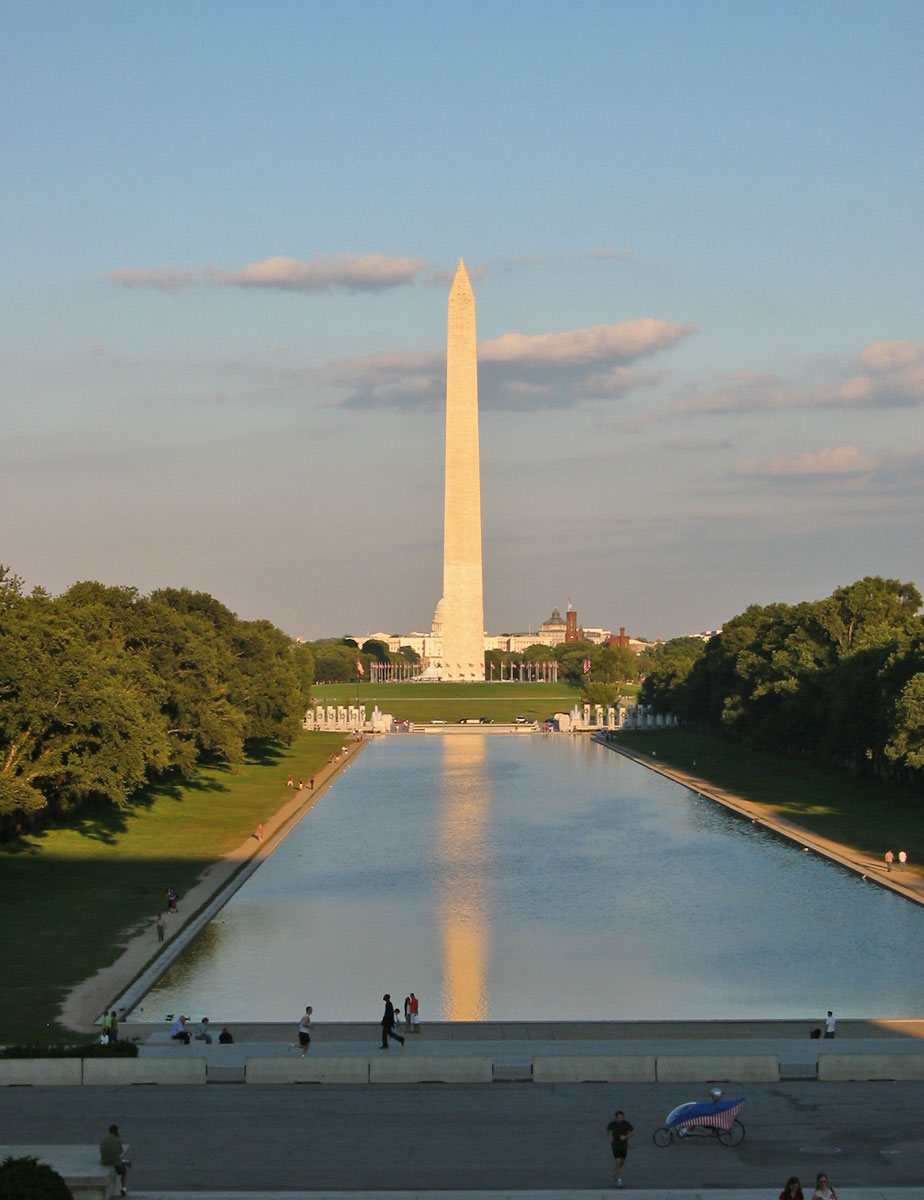
The Washington Mall, looking from the steps of the Lincoln Memorial towards the Washington Monument and the Capitol. Photo September 2006.

From President Barack Obama's Inaugural address:

We'll restore science to its rightful place

I watched the inauguration yesterday with some people from work (with a TV hooked up with an old antenna since the internet was clogged) and not surprisingly the line above got approval from the room.