Showing posts with label Astronomy and Space. Show all posts

JWST and NASA at SXSW


Northrop Grumman and NASA brought the full-scale model of the James Webb Space Telescope to the annual craziness in Austin that is South By Southwest. (For the record, I twitch uncontrollably when people abbreviate it to "South By" - if for no other reason in that it breaks the reference to North By Northwest, one of my favorite movies!) Working with one of our professors, they asked for volunteers to come down and help talk about the telscope and work at some of the tables in the NASA Experience tent, so I was down there for a while on Friday and all day Sunday. At the last minute I decided to throw my DSLR and my little travel tripod into my backpack since I knew that they were lighting the model up colorfully at night and that I had to get some photos. And I'm glad I did since I'm really happy with the way the photos turned out! Click on the photo at the top to go to the full Flickr set.

I had a great time talking about the telescope for the first part of the day even if I did manage to sunburn the top of my head. I was a little surprised that a few people asked if the model was the actual telescope, although I think everyone who asked that prefaced it with "I don't think it is, but I have to ask...". At one of the tables in the tent there were parts of the actual materials of the telescope, mostly the left over ends of things that were cut for the structure. I played with the parts a little on Friday and they are quite light, but that isn't too surprising given that it will have to be launched in to space.

I spent the afternoon working at the table with the infrared camera (the JWST will be an infrared telescope), which was a lot of fun. Kids in particular had a blast sticking their hands into the bucket of ice water and seeing how it looked on the camera. The most interesting visitor was a man with a medical condition that caused poor circulation in two of his fingers on one hand and the difference was quite easily visible.

And at the end of the day, the JWST folks made a successful attempt for an official Guinness World Record for Largest Astronomy Lesson. (The Guinness people are often at SXSW for a variety of interesting attempts at official records.) I stayed to watch that, but took off as soon as it was over since a day of sun, wind, talking, and allergies caught up to me!

Seeing a conspiracy around every corner

... or at least I have to think that is how some people go through life.

This is something I've wondered about for a long time, especially when I see people like Alex Jones going on and on about FEMA camps, black helicopters, etc. - how do people end up with a mindset that they see conspiracy in EVERYTHING? And to narrow it down some, why are so many people either afraid or seeing conspiracy in everything in the night sky? Was is started by all the noise around 2012? No, these things have been around for a long, long time - from ominous portents to selling "comet pills" to prevent being poisoned by the tail of Halley's Comet in 1910. But I can't help thinking that the 2012 stuff has created a revival of sorts.

The latest thing that prompted this thought was an email that came in to one of our general addresses and was forwarded on to me. It was a question about the object next to the moon on Monday January 21, which is a common type of inquiry we get when something bright is near something else bright in the night sky. (In this case it was Jupiter, which some lucky people got to see as an occultation - very cool!) Again, this is a very common question we get, but what caught my eye at the end of the email was "Can you tell me or is it a secret?". As I said on twitter.... "sigh". Considering that looking at it with even a decent pair of binoculars would reveal it to be Jupiter, it would be a very hard secret to keep if we tried!

Since I had the name and email address of the submitter, I decided to break out the Google and poke around. Sure enough, I found both the name and address on some forums dedicated to, shall we say... less than scientific modes of thinking. (Really, it was some serious woo-woo stuff going on there.) I could have asked him why he would have asked the "secret" question, but I'm honestly not sure that would have helped a whole lot. Plus, I'm just not that confrontational (which is probably a good thing in my line of work, it keeps me out of trouble!).

I know that in some cases (and possibly in this case, based on what I found) there is something genuinely wrong with the person's brain - and I mean that in a clinical sense, not to be flippant. And in other cases, I think it stems from a general human reaction to fear what they don't understand. After all, that was a pretty advantageous trait when we were evolving in the African savanna. So is the solution, in these latter cases, more education? I hope so, since I think that is a problem that CAN be fixed. Yes, I'm an optimist. :)

Space Shuttle Endeavour visits Austin, Part Deux

On September 20, the Space Shuttle Endeavour did a fly-over of Austin and I caught a really cool photo of it with the UT Tower. You can see my original blog post about it here.


The weird thing was that for the next few months, after the initial rush of the first few days, I still saw a trickle of retweets, views, and comments.

Then, I got a tweet from someone at Twitter saying that they would like to use the tweet/photo as part of an official Twitter project. I was intrigued, but figured it would show up somewhere buried in a 2012 wrap-up. Well, I was partially correct, it was in a 2012 wrap-up, but buried it certainly wasn't! Imagine my surprise when it showed up here:

Only on Twitter

And here:


And here:


And in the video itself:


(Below the Curiosity rover and next to Barack and Michelle Obama. Seriously?!?!)

And here's the whole video:


And one of the more amusing places that the photo and tweet showed up was this blog entry from the TexasExes: UT Tower Lands on Twitter’s Most Popular Posts of 2012


Compared to Barack Obama's most re-tweeted tweet ever, my little photo and tweet of the Space Shuttle Endeavour was nothing. But to an average person like me it was a big deal!

The stats as of today, the last day of 2012, are: on Flickr - over 5500 views, 100+ favorites and 39 comments. The actual tweet directly from my account was retweeted about 800 times, but I also sent it to several local news outlets and *their* tweets also got a lot of traffic so the twitpic is edging towards 35,000 views! There were also several shares and about 800 likes on Facebook (I think, it's hard to track stuff like that on Facebook) and there were shares on Google+ and on blogs. I did a search on the link to the Twitpic (http://twitpic.com/awk6ky) and saw all sorts of links that I didn't even know about before! And I've gained about 150 followers in the past few weeks - I'm sure most of them are people hunting for follow-backs or are spambots, but still, it's kind of cool. :)

I did post a couple more pictures of the fly-over, although they weren't as special as the Tower shot, I did like this one of it coming in:


While I doubt 2013 will bring anything like this, I'm still excited to see what happens in the new year!

Well... we're still here


Do I get to say "I told you so" now?

I haven't blogged about it much (if at all?) but I have occasionally ranted on Twitter about the questions, usually in phone calls, that I've been getting for YEARS about the so-called Mayan apocalypse coming on December 21, 2012.

I think the first calls started coming around 2006 after one of the many programs that have since been repeated endlessly the on cable channels first aired. I remember in particular a dad who was concerned about his 11 or 12-year-old son who was getting depressed after watching some of these programs. After talking for a while with the dad, I could suss out that there were other family issues (a divorce or separation in particular) and this was probably feeding an already stressful situation. My main recommendation then, after assuring him that the stuff in those programs were mostly nonsense, was to have his son talk with a school counselor. I think I talked with him a couple of times, but I don't know for sure how it all turned out.

Edited to add: While I was looking through some unpublished draft posts (that's what I get for switching around blogs so much - stuff gets accidentally left behind!) I found a bit more that I had written several years ago about this particular caller:

I got a call from a guy who had watched some wretched History Channel show about how the Mayan calendar was predicting the end of the world in 2012. The man's son (who I think was about 11 years old?) was so freaked out by it that he was having trouble sleeping, wouldn't eat and was generally withdrawing from life over it. I basically told him that it was all stupid mystery-mongering and it was no different from our calendar switching to 2000. He ended up calling back several times and we talked about how to be skeptical about those types of programs. (I also recommended that the son at least talk to a counselor at school since I think there might have been other issues that were at play). He ended up talking to the assistant of one of the authors shown briefly in the program and she told him that the author was very upset at how they had totally taken his work out of context and misreprensented it. I think I had used those exact words when I was describing to my caller some of the tactics that those programs use. I also recommended some books to him and we also talked a little about skeptical thinking in general and I think that I might have made a new skeptic by the time all was said and done.

I had forgotten about the rest of that conversation!

I've gotten a few random questions over the years, but there has been one guy who has called many times over that stretch. In a way, it was actually a good thing that he kept calling since through him I was able to find out what the latest claims were that were being tied to what I started calling "the kitchen sink" of doomsday conspiracy theories. And boy were there a lot of claims. I sometimes fell down a rabbit hole of stupid by looking up on YouTube the terms or people he was asking about. I haven't heard from him in a while but I *think* I was finally getting through to him, especially after he asked for telescope recommendations! I think that stemmed from the common claim that some bright object in the sky (usually Jupiter or Venus) was the mythical Nibiru/Planet X that was supposed to either hit us or pass close enough to flip us over on December 21. I would tell him that it was either of those planets and he would say "how do you know?" or would edge towards some of the "NASA is hiding stuff" arguments. So I told him, you can look at it yourself and see that it is Jupiter or Venus if you don't believe me. And maybe, just maybe, he did.

Then there were a couple of guys who actually came in person to the astronomy department wanting to talk with people, and in those cases, ended up in my office. These were the ones that had the potential to be pretty scary and the thought crossed my mind that I should ask for a panic button in my office (the problem being - I'm a complete klutz and would likely hit the thing accidentally if it was in an easily accessible place when I actually needed it.) One of the guys was, I think, more of an Electric Universe guy (and that's a blog post for another day, but there are other astronomers who have already done some good take-downs on that stuff). But the second one was one of a few people I've talked with who were buying in to the conspiracy talk about "gaps" in the Google Sky maps or things that show up in the IR but not in the visible, etc. Some of those were part of the Nibiru/Planet X stuff, but it was all pretty easily debunked. Unfortunately I completely messed up the answer on what one of those objects was, but since he was actually there in my office, at least I showed him in person the methodology I was using... it just ended up pointing to the wrong answer. But the answer *still* wasn't Nibiru/Planet X!

I don't anticipate that I'll hear from any of those people again or that they will call and say "Yep, you were right!". And I know that we'll still be dealing with versions of these claims for many years to come - the Mayan calendar thing was just a convenient date, but most of the claims were around before and will be around after. I've already seen rumblings about a comet that has a chance to be really spectacular next year, similar to the non-story that was Comet Elenin last year. (And I'll note that all of the "see, nothing happened then, did it?" arguments didn't disabuse most people of their 2012 beliefs, so I don't anticipate the non-pocalypse of 2012 will keep people from buying in to future claims.) But if we're lucky, the comet will be another bright Hale-Bopp-like show, but hopefully without a cult suicide this time. I have to admit that the main reason I waited until today to post this was on the outside possibility that a story broke late yesterday of some Jonestown or Heaven's Gate incident, but thankfully it seems none was forthcoming. Whew.

So December 21, 2012 turned out to be just another day, like I and many other people said it would be. Solar activity was low, there were the usual number of earthquakes, no supervolcano eruptions, asteroid impacts, etc. I personally used it to catch up on laundry because I've been sick for a week and a half!

And before I forget - a BIG thanks to 2012hoax.org for creating the best place for sending people to get good, scientific answers to these claims and giving people a place to air their concerns and be reassured. I know they are planning to re-tool the site into a place that will be useful beyond this 2012 "expiration date" and I'm sure I'll be sending people to the new site too.

Since this is getting long, I'll save the "wow, 2012 actually turned out to be a pretty amazing year" stuff for another post!

* * * * * * *

The picture at the top is of the Temple of Kukulkan at Chichen Itza in the Yucatan peninsula of Mexico. Since that was the image that most people seem to include in their 2012 posts, I figured I'd at least pick on with me in it. Yep, that's a 15-year-old me in the green shirt and straw hat in the middle of the photo. I still have that hat! Not pictured: the crutch that I had used to help me get up the pyramid because I had broken my ankle about 6 weeks earlier and was just then getting my muscle back in my leg to walk without support. The friend that took the picture carried the crutch back down so I could inch my way down along the chain that runs on the side you can climb to aid people going up and down - those stairs are thin and steep!

McDonald Observatory and West Texas 2012


I traveled out to McDonald Observatory for work back in July and I'm just now getting around to posting the photos! This was the first time I'd been out in 5 years, and the first time since I had ventured into playing with HDR photography (more about that here, with my first HDR photo) so I figured I would have fun taking photos in what little spare time I had. That's the one thing about going out there for the board meetings - it's pretty much two days of travel and two days of being really busy! And to top it off, I managed to catch a cold shortly before leaving, so I was fighting the fatigue from that the whole time too. But it is always nice to get out to the dark skies and mountains of west Texas!

The area is recovering well from the horrible fires of 2011 and had even had a little rain in the week before I was there, so things greened up a little. The weather was great while I was there, and as usual, I was caught off-guard by how chilly it can get after dark, even in the middle of summer. (Seriously, I've been out there several times in July, you would think I would have learned my lesson by now!)

I had a chance to look through the 107" and the 36" telescopes this year, and it really brought home how much I am missing with the 16" in the middle of Austin (and with a very dirty mirror at the moment). When you aren't used to it, it can be a bit of a shock to be able to look into the eyepiece and see the Ring nebula straight on and without any of the tricks (filters, averted vision, etc.) that we have to do in the city. Perhaps the most astounding was the Whirlpool Galaxy and easily being able to see the spiral arms. And of course, Saturn was its usual gorgeous self!

On the way out Sunday morning I decided to leave a different way so I could swing through the Sierra Madera impact crater. I had done it once before when I was out in 2003, shortly after writing a paper on the impact craters in Texas for a geology class. I knew that at some point fairly recently they had put up signs on the highway to tell people that they were driving through it. It would be nice if they eventually put up a historical marker or some sort of information plaque, but just the acknowledgement that it was there at all is pretty cool!

The picture at the top goes to my Flickr set from the trip. You'll see that I went a bit overboard with the HDR on a few of the shots, but I was having fun!

Space Shuttle Endeavour visits Austin

The shuttle Endeavour left Florida on its way to Los Angeles where it will be housed at the California Science Center and on the way it has made a few stops and flybys. It stopped over in Houston last night and I knew that a re-fueling stop in El Paso was on the schedule, so I was hoping that it would make a fly over Austin as well. And it turned out that they had scheduled a low pass over the Capitol, which I knew we'd be able to see really well from my office building on the UT campus. So (even though I was up on the telescope last night) I decided to come in early and try to get a picture. Funny enough, the ones I got of it over the Capitol and city weren't all that great, but as it flew past the UT Tower, I got this shot:


(Click over to Flickr for the larger version)

I posted it to Twitter and copied the tweet to a couple of local news organizations, thinking they might want to use it for online galleries. But of course, as things often do on the internet, it took off and I've been flooded with replies, emails, Facebook comments, etc! I got a call from the Director of Public Affairs at UT and they will be handling any of the licensing that may arise. He said they were going to contact the AP (!!) so who knows? Since I took the photo at work it really is UT's to do with as they wish, I just want credit (which I know they will honor) - I can't wait to see where the image pops up!

Still kind of blown away by the reaction... And ultimately I'm just really happy that I got to see the shuttle!!

A summer to say goodbye to heroes

Although I think both Sally Ride and Neil Armstrong shied away from the label 'hero' both were heroes to me.


I had the great pleasure of meeting Sally Ride when she gave a talk at UT a few years ago. She was a great inspiration to me and many other young girls who at some point dreamed of being an astronaut. After leaving NASA she founded Sally Ride Science which is dedicated to getting young people interested in science, a mission very close to my heart!


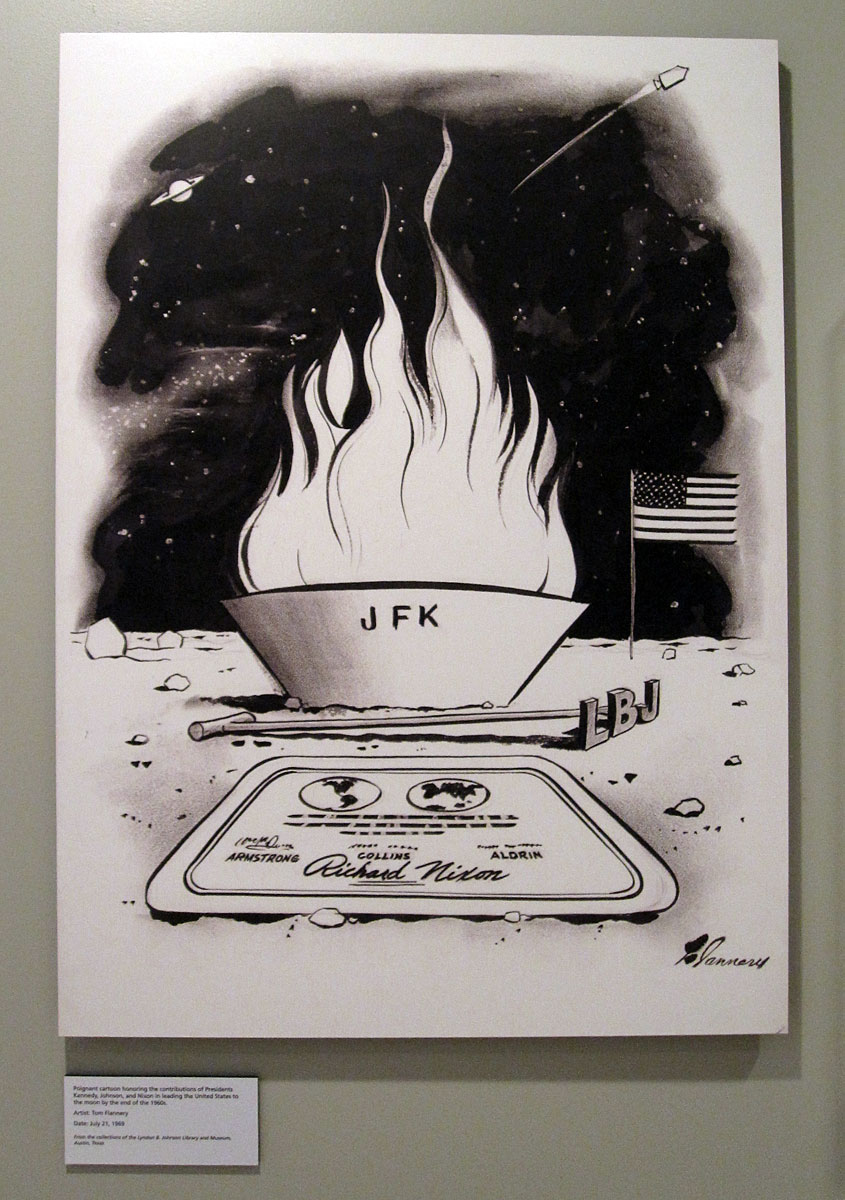
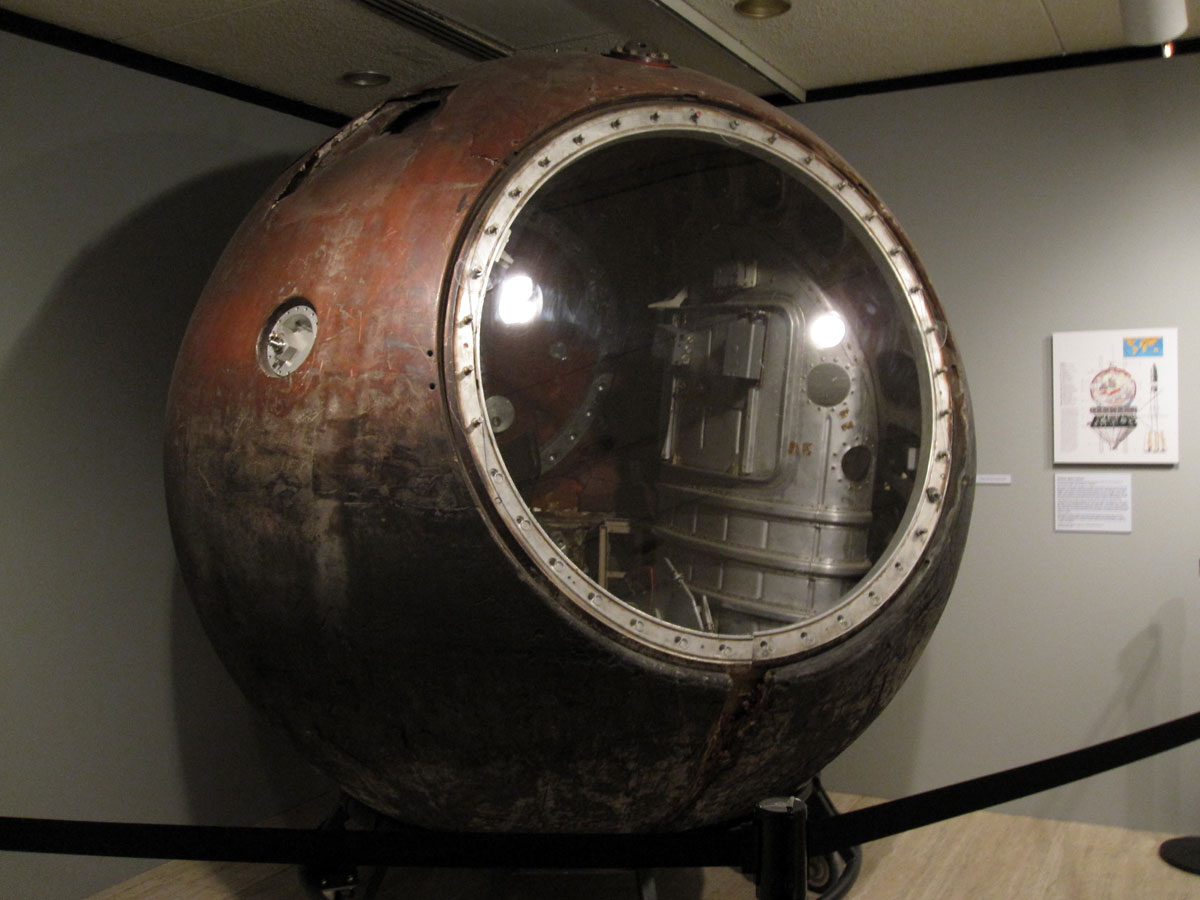
Sadly I never had a chance to meet or even see Neil Armstrong in person, but I have seen many artifacts of his astronaut career over the years. And pretty much every time I look at the moon I stop and think - people have walked there!

In that vein, I loved the final paragraph of the statement from the Armstrong family:

For those who may ask what they can do to honor Neil, we have a simple request. Honor his example of service, accomplishment and modesty, and the next time you walk outside on a clear night and see the moon smiling down at you, think of Neil Armstrong and give him a wink.

Not surprisingly that resonated with many people and the hashtag #winkatthemoon took off on Twitter and has spawned several websites and galleries of people submitting photos of the moon. It was a great way to honor not just Neil Armstrong, but the whole Apollo program. I can only hope we'll be seeing humans follow in Neil's footsteps soon.

Per ardua ad astra

Transit of Venus


Now that I've had time to recover a little, I thought I would write up my experience organizing and running the public viewing of the June 5, 2012 Transit of Venus event.

Based on my experiences with the "Mars Close Approach" event in 2003, I knew going in that it would almost certainly be a very busy day and prepared for it. The transit of Venus happens in pairs 8 years apart every 100+ years and after the one in 2012 the next chance would be December 2117. Who knows what advances in medical science will do to increase our longevity over the next 100 years, but regardless, the majority of us won't be around to see the next transit of Venus. Since the one in 2004 wasn't visible in Austin, this was basically my only chance to see it with my own eyes. And pretty much ever since the 2004 transit, the 2012 one had been on my long-term horizon as something to plan for at work.

As we got closer to the day, I was contacted by the local amateur astronomy club, the Austin Astronomical Society, and the Astronomy Students Association (our undergraduate group, which I was a charter member of back in the day!) to do a joint event. This ended up working out well since it meant a lot of instruments and volunteers - and in the end we needed them all!

We didn't really know how many people to expect since we weren't requiring reservations or RSVPs. I had received a few phone calls and emails but since we had the information posted on the web it was hard to predict how many people would actually come. We estimated about 1000 people came to view Mars at the 2003 event that I was using for comparison, so I wasn't too surprised that we got swamped. One of my fellow organizers was expecting a few hundred over the three hours it was visible in Austin, but in the end we estimated that about 2500 people came through the various lines. At one point the line wound its way down the stairwell from the 17th floor to the 4th floor (the ground level for my building)!

The weather was the big concern going in to the day and the forecast looked a little dodgy for a while. But in the end the clouds mostly stayed away and we saw all but the last 15-20 minutes that the transit was visible in Austin.

I started the day in the room that our solar telescope projects in to, but only about the first 90 minutes of the transit was going to be visible there. I was actually happy to be the person to run that since it meant I got to stay inside in the air conditioning for the hottest part of the event! The image at the top is of the view we had from the solar telescope - it's about a three foot image on the wall.

Once we closed up the heliostat I set up a live stream in the auditorium and checked on the state of the line. We knew after a point that there was no way that people joining the line would be able to get to the roof in time, so that's when we started sending people to the live stream. They wouldn't get to see it with their own eyes through a telescope, but at least they got to see it and ask questions of astronomers!

I went up to the roof for the last 45 minutes or so and stayed with the undergraduates (and sneaked a peek through our 8-in telescope with solar filter they were using) until the sun ducked behind the clouds about 20 minutes before sunset. I also looked at it unmagnified through a welder's glass and the dot of Venus was easily visible.

I stayed around to take down signs, etc. and finally left around 9:30 p.m., completely exhausted (I logged over 12,000 steps on my pedometer), but so glad that we were able to pull off a pretty successful event!

Historical Astronomy exhibit at the HRC


Heliocentric diagram from Nicolaus Copernicus' "De Revolutionibus"

I mentioned in a previous post that I went over to the Harry Ransom Center on the Friday at the end of the AAS meeting to see the small exhibit of astronomy texts and items that they had set up for the week. I had already seen several of the items (and I really wish they had brought out the Tycho with the etching of the coats of arms of his ancestors - including Rosencrantz and Guildenstern) but it was neat to see them again. There were also a few items from the Herschel collection that I don't think I've seen before. And this was just a small fraction of the stuff they had out for the International Year of Astronomy exhibit back in 2009.

You can see the full set on Flickr here

AAS Day 5

The final day - and it was a busy one!

It's kind of ironic that the one day I was actually able to make the 8:30 a.m. talk was the final day of the conference. I guess part of it was that I skipped the apparently epic party the night before. :)

I'm glad that I was able to make it to the talk since it was one that was about something that I think about a lot "The Evolving Context for Science and Society", presented by Alan Leshner, Chief Executive Officer of the American Association for the Advancement of Science. Interestingly, before Leshner, Congressman Lamar Smith (R-Tx) spoke for a few minutes (he wasn't on the program and came over at the last minute from a nearby function). I wish I had a recorder with me since I would like to be able to quote some of the stuff he said so I "un-spin" the politics from it. Also, I would to have had a chance to ask him why, if he is the science fan and champion he claims to be, he authored a bill that would have broken the internet.

A lot of what Leshner was talking about was stuff that I already know about and think about, but I'd be willing to bet that some fraction of the audience hadn't. I posted a lot to Twitter about this, so most of what I'm writing here was compiled from those tweets.

Leshner started out by laying out the case for why the general public needs to have some fundamental understanding of science: because it is in every part of our lives now. Then he moved on to the conflicts between science and society. He first looked at legitimate problems that science has such as ethics violations, exaggerated claims, etc. that cause poor views of scientists. There are also problems that scientists face, such as poor funding (he had an interesting remark about how he hears people now saying they are happy when they have flat funding as opposed to taking budget cuts). Leshner did have nice words for how astronomy does decadal surveys and that most other science fields don't.

Leshner then moved on to the conflicts between science and the public, including what the causes behind those conflicts might be. Part of it is that people have little understanding of what is and what is not science, giving examples such as ESP, evolution denial, astrology. Another factor is tension of science conflicting with political and economic issues, the prime example being global warming. There is also when science conflicts with core human values, such as research on embryonic stem cells. In addition, generally speaking, the public does not feel immediate consequences of science denial, although scientists to (for example, public opinion calling for elimination of stem cell research - the funding gets axed but the public might not realize that the research was beneficial to them until it is too late).

So, how do we fix this?

Leshner said that education is important, but that we can't just educate our way out of the problem. We need to change our approach and engage with the public - talk WITH instead of just TO the public. Personal engagement works best, let people actually see what you do. (Possibly not as big a deal with astronomers, but I could see how this would be particularly important in the biological sciences.) One of the more quotable lines (and it got me several re-tweets) was "some scientists are bad at speaking, but some also aren't good at listening.". His core point at the end: "the science-society relationship needs constant attention."

Some thoughts I have on the talk - I definitely agree with Leshner's approach, but sometimes those initial conversations of trying to talk WITH (as opposed TO) the public can be difficult when the people you are trying to engage don't have some basic level of understanding. When I tweeted to that effect, I was mainly thinking of people who have been literally calling for years who are scared of 2012 doomsday nonsense. When I try to deconstruct the claims that they have heard it can be quite difficult because the caller doesn't have a basic grasp of astronomy or how the sky works. I don't necessarily have the time to break it down to the basics and give them an introductory lecture on astronomy. And I've found that just as soon as I start trying to explain one claim, it brings up another! (Yes, I'm afraid my frustration is coming through...).

I certainly don't have all the answers for how to fix these problems, and unfortunately there will be some people that will be unreachable no matter what (due to strongly-held religious beliefs, retreating into conspiracies or what have you...). I don't recall Leshner addressing the media's role in the equation much, and that is certainly something else to consider. One of these days I'll try to write some more of my thoughts on all of this, but suffice to say the talk got me thinking about it even more than I already do!

**********

After Leshner's talk I went to one of the Exoplanets sessions. I had expected this to be the last science session I would get to, but it turned out my tear-down duites didn't take the whole 5 hours I had been scheduled for. So, I grabbed a sandwich and ate (as quietly as possible) during my co-worker Don Winget's talk "White Dwarf Stars from the Telescope to the Laboratory and Back Again: Exploring Extreme Physics". The white dwarf team here at UT does a lot of neat work and they've hooked up with people who are able to simulate white dwarf atmospheres in the lab. Cool stuff!

I checked in with the organizers and they didn't need help at that moment, so I managed to sneak in to another science session: "Kepler Observations of Exoplanets and Systems". While there I spotted Jill Tarter of the SETI Institute! One of the talks in that session was about my new favorite term: exomoons. Yes, moons around planets in other solar systems. Kepler hasn't found any yet, but it's only a matter of time! There was an interesting question as to whether that project was also looking for evidence of rings around the Kepler planets. They aren't but they are flagging potential candidates for other researchers to follow up with. One of the final talks was on circumbinary planets (think Tatooine), given by Bill Welsh whom I knew when he was a post-doc here at UT. Here's the press release on the research: NASA Discovers New Double-Star Planet Systems

**********

Well, that's it for AAS 219! The next time the general session meeting comes back to Texas it won't be here in Austin, so I'm not sure whether I will go or not. I have a few years to decide though!


AAS Day 4

I had the best of intentions to get to Robert Kirshner's talk on "Exploding Stars and the Accelerating Universe" (an interesting topic to begin with, but I also know he's a good speaker) but I had to get gas and money before going in to the convention center so I didn't make it in time. The work he discussed is the research that led to the discovery of "Dark Energy" and was honored with the 2011 Nobel Prize in Physics. I knew that was research that would eventually be awarded a Nobel but what I wasn't sure of was how they were going to choose *who* to award given the large number of people who contributed to the discovery (a lot of projects are done by research teams). In the end it was awarded to Saul Perlmutter, Brian Schmidt and Adam G. Riess as team leaders. Hopefully someday I'll be seeing some of my co-workers getting that prize after figuring out what dark energy actually is with HETDEX!

I didn't have volunteer duty in the morning so I went to the "Solar System and Extrasolar Habitable Zones" session. Because the majority of planetary (in *our* solar system) research is presented at the AAS Division for Planetary Sciences and the American Geophysical Union meetings, there isn't usually that much of it at the AAS general meeting. (I really need to start trying to convince some of my co-workers that it's time for the DPS to come back to Austin - it's been here three times including the first unofficial one organized by Carl Sagan and Harlan Smith.)

The first talk from the session was about the Habitable Zone Gallery project that tracks the orbits of planets discovered around other stars and how they related to their parent star's habitable zone. There were also talks about the impact that formed the Moon, Kuiper Belt Objects, atmospheres of "Super-Earths" and Saturn's weird moon Iapetus.

I did another round of lunch and posters and grabbed stuff at some of the booths (including some interesting freebie journals) and then when to the NASA Town Hall. I went a little early, which turned out to be a good thing since it ended up packed. The first to speak was former astronaut John Grunsfeld who was just appointed as Associate Administrator for the Science Mission Directorate at NASA (I wonder if that all fits on his business card?). Grunsfeld flew on five shuttle missions, including three Hubble Space Telescope servicing missions so he's another one of my heroes. :) He has a PhD in physics and has served as NASA Chief Scientist and as Deputy Director of the Space Telescope Science Institute. The second speaker was Dr. Paul Hertz, the new NASA Chief Scientist. Unfortunately I once again had a low laptop battery so I didn't take notes at this session either.

One of my co-workers was part of a session titled "Astronomers: Teach Climate Change" and I wish I could have attended it but I had to work at another session. I had a nice chat with him at lunch about the topic though and I was really pleased to hear that he's been incorporating climate change topics into his introductory astronomy classes at UT!

The session I was working was on Spiral Galaxies and it ran over, so I was a little late to the last talk I was working "Galaxy Formation Star-by-Star: the View from the Milky Way" by Kathryn Johnson. Thankfully they didn't really need much in the way of volunteer help!

Also today, the Kepler Mission team made even more great exoplanet announcements (there are always great press releases during these meetings and the exoplanet people really had some good ones this year!) including: NASA's Kepler Mission Finds Three Smallest Exoplanets. So basically we're finding planets in habitable zones and finding Earth-sized planets so it is only a matter of time until we find the holy grail: an Earth-sized planet in a habitable zone around a Sun-like star. (If I was a betting person, I take a chance and say we'll find one before the end of the year.) More about exoplanets tomorrow!

AAS Day 3

I started off the day a little late (again) but had a chance to get a few photos of friends at posters before heading to my first session.


Drs. Mary Kay Hemenway and Chris Sneden and the SOFIA Teachers with their research poster.

I designed the poster above, so I had to get a photo of the authors with it!

The first session I worked was also one that I was interested in anyway - "Professional Ethics in Astronomy: An Ongoing Dialogue". One of the panelists was a professor at my university many years ago, but I'm pretty sure he didn't remember me. The discussion was very interesting and it makes me really glad that I don't have to deal with a lot of the issues that some of my colleagues do! I wish I had taken more detailed notes on the actual talks and resulting questions and conversations but my laptop battery was low. Anyone interested in the topic should check out the Sigma Xi ethics publications. Unfortunately the session that is probably most related to my own work - "Education, Outreach and Citizen Science" was at the same time so I wasn't able to attend.

The next talk I attended was the Annie Jump Cannon Prize lecture by this year's recipient, Rachel Mandelbaum. The Cannon Prize is awarded to a young woman PhD astronomer residing in North America. Looking over the list of previous winners I realized that I personally know several of them!

After a quick lunch and stroll through the posters, I worked a session on "Pulsars and Neutron Stars", which thankfully ended a little early so I could run over to catch the end of the "Working in Science Policy" panel. This is another one that I wish I could have attended, partly out of interest but also because one of the panelists was an old friend. I got a brief chance to say "hi" at the end of the panel, but moved aside so he could talk with people who were actually there to learn about jobs. :) While I was there I ran into another old friend that I had been meaning to catch up with and ended up sitting around and talking with her for the next few hours instead of attending more talks.

After catching up for a while we decided to go out for dinner at one of my favorites - Threadgill's (her choice since she's the one who doesn't get to Austin much, but there wasn't an argument from me!), along with her editor from Astronomy Magazine. We popped back over to the convention center after dinner and then I bailed on the UT Astronomy alumni party and the Saving Hubble film screening (which were both going on at the same time) and went home. I really don't have the stamina for these meetings that I did back in the 1990s!

One other thing from today, the NRAO announced that the VLA in New Mexico has been renamed the Karl G. Jansky Very Large Array in honor of the founder of radio astronomy. A very appropriate choice!

AAS - Day 2

This was the first full day of the meeting after the previous night's opening reception (which I decided not to attend). I skipped the 8:00 a.m. welcoming address and 8:30 a.m. invited session this day in favor of a few extra minutes of sleep.

My first volunteer session was on "Exciting Astrophysics: Supernovae, Relativistic Astrophysics, and Other Results I" and it was my first introduction to the system they have devised for getting the talks into all of the rooms from the central "speaker ready room". The idea is to have all of the speakers pre-load their talks in one central location and they are then piped to the appropriate room that is already set up with a laptop and projector (I was pleased to see all of the machines were Macs - both in the ready room and meeting rooms!) There were a few hiccups in that first session, but the a/v staff were able to get it ironed out before we were scheduled to start. Having run the a/v for MANY astronomy meetings, I was impressed by the set-up, which seemed to work really well (at least in all of the sessions I attended or worked).

After lunch I went to the James Webb Space Telescope town hall, which turned out to be as interesting as I expected, but not at all as contentious as I thought it might be given budget issues. One of the neat things mentioned in one of the talks was the live JWST construction webcam where you can see into the clean room. The final talk in the town hall was how the telescope could be used in the effort to detect and characterize the atmospheres of all of the planets we're finding around other stars. I'm still kind of amazed that we even have detected the planets, much less their atmospheres!


Model of the JWST in the Northrop Grumman booth

I worked a second volunteer session - "Exciting Astrophysics: Supernovae, Relativistic Astrophysics, and Other Results II" and I then went to the "Challenges and Achievements in 50 Years of Human Spaceflight" talk by retired NASA astronaut Steve Hawley. The talk was basically an overview of the US (and some of the Soviet/Russian) manned space program, with Hawley discussing some of his own flights. Hawley has a PhD in Astronomy and Astrophysics, so he is "one of us", but it was still nice to see the standing ovation from 1000+ astronomers for an astronaut who has literally risked his life for our field.


Retired astronaut Dr. Steven Hawley speaks at the AAS meeting.

As a NASA astronaut, Hawley flew on a total of five space shuttle missions, including the deployment of the Hubble Space Telescope (STS-31), a servicing mission to Hubble (STS-82) and the deployment of the Chandra X-ray observatory (STS-93). STS-93 was Hawley's final flight and has the distinction of being the first shuttle commanded by a woman - Colonel Eileen Collins. Hawley showed this neat photo and pointed to the streak saying: "That's me!". I have my own photo of that re-entry, since it was visible over a large part of Texas.


Image: NASA

Probably one of my favorite things from Hawley's talk was that space sickness is "Space Adaptation Syndrome" in NASA speak. He also had some interesting comments about how much quicker things progressed in the early space program (Mercury, Gemini and Apollo) vs. now. Of course there is a lot more of an issue with getting and keeping funding then there was in the heady early days of manned space flight and the competition with the Russians.

After Steve Hawley's talk, the Historical Astronomy Division awarded the Doggett Prize to Woodruff T. Sullivan who presented a talk on "Cosmic Noise: The Pioneers of Early Radio Astronomy and Their Discoveries". I stayed for that talk but I was getting tired and decided not to attend the 8:00 p.m. public talk by Steven Weinberg on "Big Science in Crisis". I kind of wish I had, but I know that he is writing up the talk as an article for the New York Review of Books.

AAS 219 - Day 1

Before I get too far away from the actual event, I thought I would write up my experiences at this year's AAS meeting, the first I had fully attended since the late 1990s.

The American Astronomical Society (AAS) meeting returned to Austin earlier this month and I was able to volunteer for free registration. Because I fall in to a weird gray area in the astronomy profession (undergraduate degree and 15+ years employment in the field, but no PhD) I haven't been a member of the organization and even with membership the meeting costs are high. (They now have an educational affiliate membership category that I qualify for and I'm planning to join under it soon.) So working at the meeting seemed the best way to get a chance to attend. The trade-off is, of course, that I would have to work some sessions that I might not really be interested in and might miss some that I was. But given the way these conferences are scheduled it's pretty hard for everyone to get to everything they want to, so I would have missed stuff no matter what.

On Sunday I had to attend the mandatory orientation session, which was actually a good thing since it meant that I would already be around for the "Transit of Venus" special session put on by the Historical Astronomy Division of the AAS. Part of my reason in attending was just out of interest - I love history of science topics - but also for ideas in how to do our public outreach events for this year's transit. As exhausting as the 2003 close approach of Mars events were, I'm glad for the experience heading into this June's transit. Part of the popularity of the Mars event was the large amounts of press coverage stressing the "rarity" of the event. I'm putting "rarity" in quotes for the Mars closest approach because while *technically* Mars would never be that close again in our lifetimes, it will get nearly as close in 2035, still quite within the lifetimes of people who saw it in 2003. But, in the case of the transit of Venus across the sun, it's a pretty fair bet that anyone alive now will not get the chance to see it again since the next won't be for another 105 years. Although I don't want to make any predictions about advances in medicine, so who really knows for sure. But it's pretty safe to say that most people alive now will not get another shot.

Three of the talks were mostly about the history of the transits in 1639, 1761, 1769, 1874 and 1882, but the final talk was an overview of outreach activities for the 2004 transit and what is already underway in planning for this year's. I got several good ideas out of the presentation, so now I just need to start the actual planning!

16th Century Danish Astronomer Tycho Brahe Exhumed


Image of Tycho Brahe from the University of Texas at Austin Department of Astronomy image collection

This is another one of those stories that comes along every so often that allows me to geek out from both the history and science perspective (and in this case, my actual career science field - astronomy!). Tycho is one of those interesting characters of science that seems to cause endless fascination, so I'm not surprised to see this. And yes, he's the one who famously had a metal replacement nose after losing the flesh one in a duel!

From The BBC:
Danish astronomer Tycho Brahe exhumed to solve mystery

Tycho Brahe was a Danish nobleman who served as royal mathematician to the Bohemian Emperor Rudolf II.

He was thought to have died of a bladder infection, but a previous exhumation found traces of mercury in his hair.

A team of Danish and Czech scientists hope to solve the mystery by analysing bone, hair and clothing samples.

Tycho was born Tyge Ottesen Brahe in 1546 in Scania, which at the time was a Danish province, and studied astronomy at the University of Copenhagen, as well as German academic institutions.

He catalogued more than 1,000 new stars and his stellar and planetary observations helped lay the foundations of early modern astronomy.
...

Professor Jens Vellev, from Aarhus University, is leading the team of scientists and archaeologists which opened the tomb in Tyn Church on Monday.

He says he hopes to get better samples of hair and bones than were taken in 1901.

The use of the latest technology to test the samples may also help shed more light on the mystery of the astronomer's death, although Professor Vellev is not promising anything.

"Perhaps, we will be able to come close to an answer, but I don't think we will get a final answer to that question," he said.

The scientists also hope to determine what kind of metal Brahe's prosthesis was made of - it was commonly believed to have been gold and silver, but others suggested it might have contained copper.

Full article

More articles (all of the articles have interesting pictures):
NPR: Danish Astronomer's Remains Exhumed In Prague
Scientific American: Was Tycho Brahe poisoned? 16th-century astronomer exhumed--again

And finally, a bunch of photos and some video from the research are available on the Opening of Tycho Brahe's Tomb pages from Aarhus University

Science Picture of the Week #98


The telescope at Painter Hall on the University of Texas campus, with the 2005 Football National Championship "1"

Science Picture of the Week #97


Constellations painted on the ceiling of Grand Central Terminal in New York City. Photo August 2006.

Science Picture of the Week #96


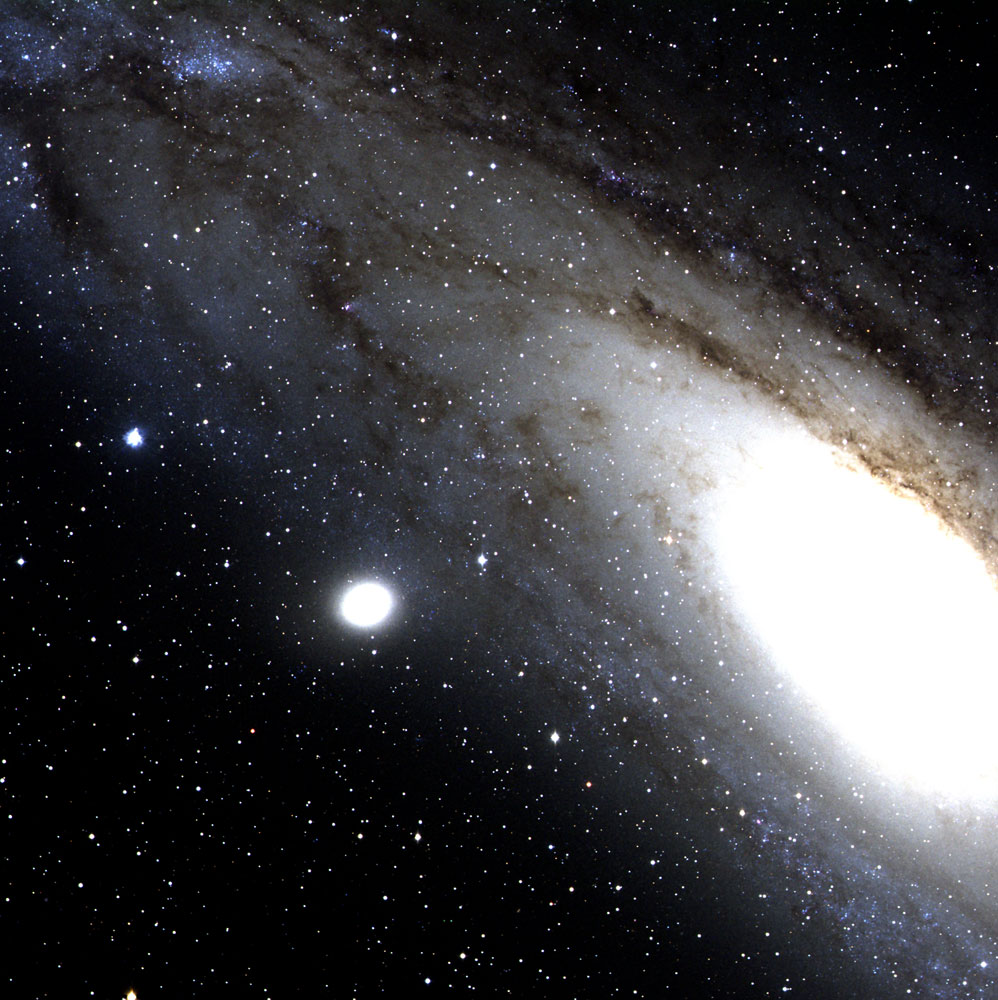
The Andromeda Galaxy (M31) and one of its satellite galaxies (M32). Taken with the Prime Focus Camera on the 30-inch telescope at McDonald Observatory in 1998 (AASTRA participants took the images and then I combined them into the final color image you see here.)