[I decided to cross post this from my Tudorhistory blog since the science is just as important as the history!]
As expected, the University of Leicester announced this morning that they have confirmed that the remains found last summer are indeed those of Richard III. (You can see my initial round-up from September here.)
Here is the re-launched site about the project from the university: The search for Richard III - completed.
You will find photos and information about all of the lines of inquiry that went into the identification there. The video of the press conference is supposed to be uploaded at some point as well. You can find the presentations by the speakers at the press conference here. They also mentioned on their twitter account that all of the research will be submitted to academic journals for peer review. (I'll stay out of the discussion of public and media interest vs. academic procedure, since I honestly don't know what the proper answer is. I've seen in the sciences that "press conference before peer review" can have unfortunate results, but I've also seen conclusions validated once papers are published.)
Here are some other informative links:
* Leicester car park skeleton 'is that of Richard III'
* Richard III discovery in pictures
* Richard III dig: DNA confirms bones are king's
* Richard III: The twisted bones that reveal a king
* Richard III's remains found in Leicester (nice diagram of the site on this one)
I've also seen some remarks about the DNA testing not being the "proof" that it is being presented as, and that is technically correct. There is a chance that it is coincidence that the Michael Ibsen and Richard III have the same mitochondrial DNA because of its nature (if it is rare or common will affect the significance of the match). They were also able to track down another maternal line relative who consented to testing (but wished to remain anonymous) and the mtDNA matched between Ibsen and the anonymous subject as well as matching to the skeleton. We'll know more once the academic paper comes out but in the text of the presentation the scientist is quoted as saying "The analysis showed that these two individuals shared the same relatively rare mitochondrial DNA sequence." I would also point out that the DNA tests did not exclude positive identification of Richard III (either because the skeleton wasn't Richard's or from mistakes in the genealogy) so that is helpful information as well. There is also on-going work with testing the Y-chromosome against known male-only lines, but this is more difficult and may be inconclusive for a variety of reasons.
To me, the osteological evidence, the historical and archaeological evidence, and the fact that the DNA and carbon dating results do not rule it out, the identification of the bones as those of Richard III does seem to be the correct conclusion. But keep in mind my degree is in astronomy, not archaeology! Still, all-in-all, it was an exciting day for me as a fan of both science and history.
Showing posts with label History. Show all posts
Showing posts with label History. Show all posts
Historical Astronomy exhibit at the HRC

Heliocentric diagram from Nicolaus Copernicus' "De Revolutionibus"
I mentioned in a previous post that I went over to the Harry Ransom Center on the Friday at the end of the AAS meeting to see the small exhibit of astronomy texts and items that they had set up for the week. I had already seen several of the items (and I really wish they had brought out the Tycho with the etching of the coats of arms of his ancestors - including Rosencrantz and Guildenstern) but it was neat to see them again. There were also a few items from the Herschel collection that I don't think I've seen before. And this was just a small fraction of the stuff they had out for the International Year of Astronomy exhibit back in 2009.
You can see the full set on Flickr here
16th Century Danish Astronomer Tycho Brahe Exhumed

Image of Tycho Brahe from the University of Texas at Austin Department of Astronomy image collection
This is another one of those stories that comes along every so often that allows me to geek out from both the history and science perspective (and in this case, my actual career science field - astronomy!). Tycho is one of those interesting characters of science that seems to cause endless fascination, so I'm not surprised to see this. And yes, he's the one who famously had a metal replacement nose after losing the flesh one in a duel!
From The BBC:
Danish astronomer Tycho Brahe exhumed to solve mystery
Tycho Brahe was a Danish nobleman who served as royal mathematician to the Bohemian Emperor Rudolf II.
He was thought to have died of a bladder infection, but a previous exhumation found traces of mercury in his hair.
A team of Danish and Czech scientists hope to solve the mystery by analysing bone, hair and clothing samples.
Tycho was born Tyge Ottesen Brahe in 1546 in Scania, which at the time was a Danish province, and studied astronomy at the University of Copenhagen, as well as German academic institutions.
He catalogued more than 1,000 new stars and his stellar and planetary observations helped lay the foundations of early modern astronomy.
...
Professor Jens Vellev, from Aarhus University, is leading the team of scientists and archaeologists which opened the tomb in Tyn Church on Monday.
He says he hopes to get better samples of hair and bones than were taken in 1901.
The use of the latest technology to test the samples may also help shed more light on the mystery of the astronomer's death, although Professor Vellev is not promising anything.
"Perhaps, we will be able to come close to an answer, but I don't think we will get a final answer to that question," he said.
The scientists also hope to determine what kind of metal Brahe's prosthesis was made of - it was commonly believed to have been gold and silver, but others suggested it might have contained copper.
Full article
More articles (all of the articles have interesting pictures):
NPR: Danish Astronomer's Remains Exhumed In Prague
Scientific American: Was Tycho Brahe poisoned? 16th-century astronomer exhumed--again
And finally, a bunch of photos and some video from the research are available on the Opening of Tycho Brahe's Tomb pages from Aarhus University
Science Picture of the Week #97

Constellations painted on the ceiling of Grand Central Terminal in New York City. Photo August 2006.
Picture of the Week #95
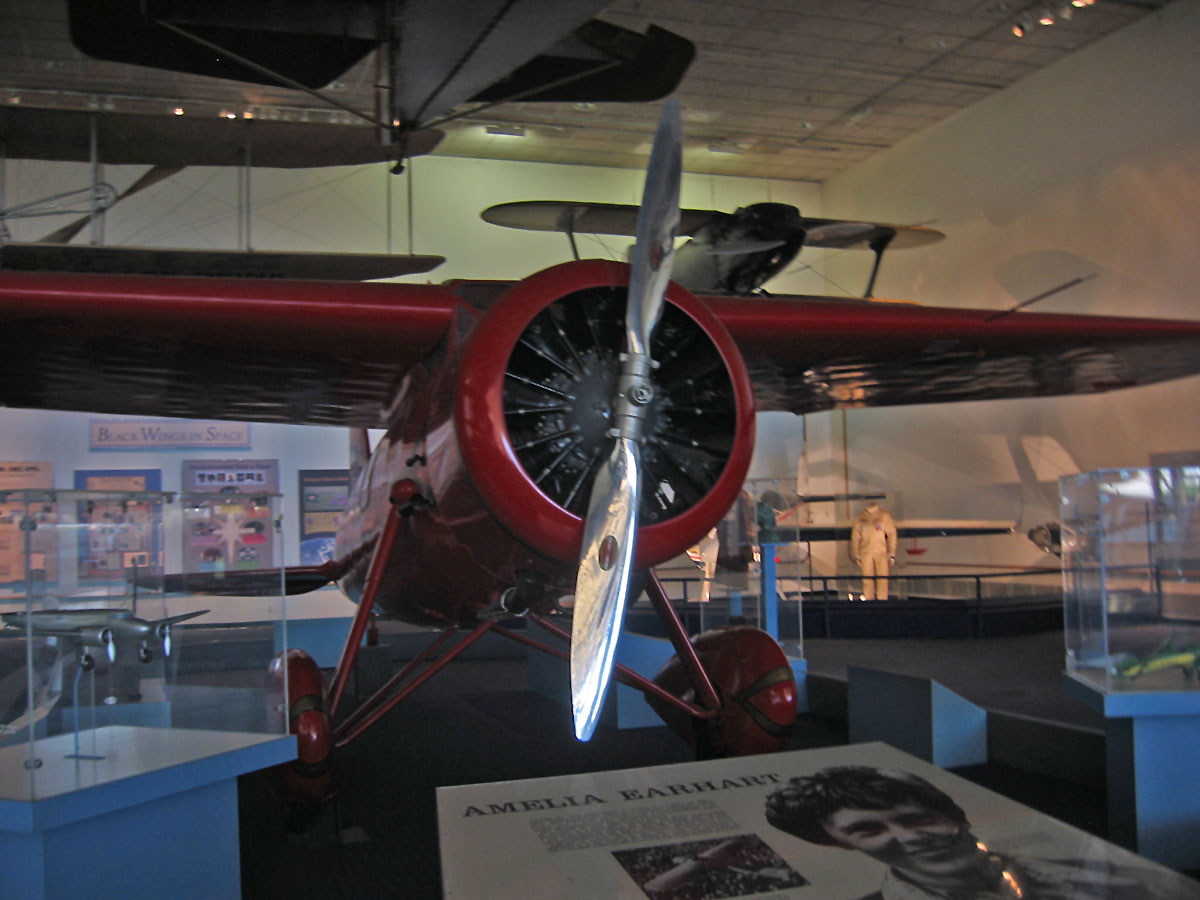
Amelia Earhart's Lockheed Vega in the National Air and Space Museum. Photo September 2006.
Since I just finished listening to a biography of Amelia, I thought this would be a good choice this week.
Picture of the Week #94
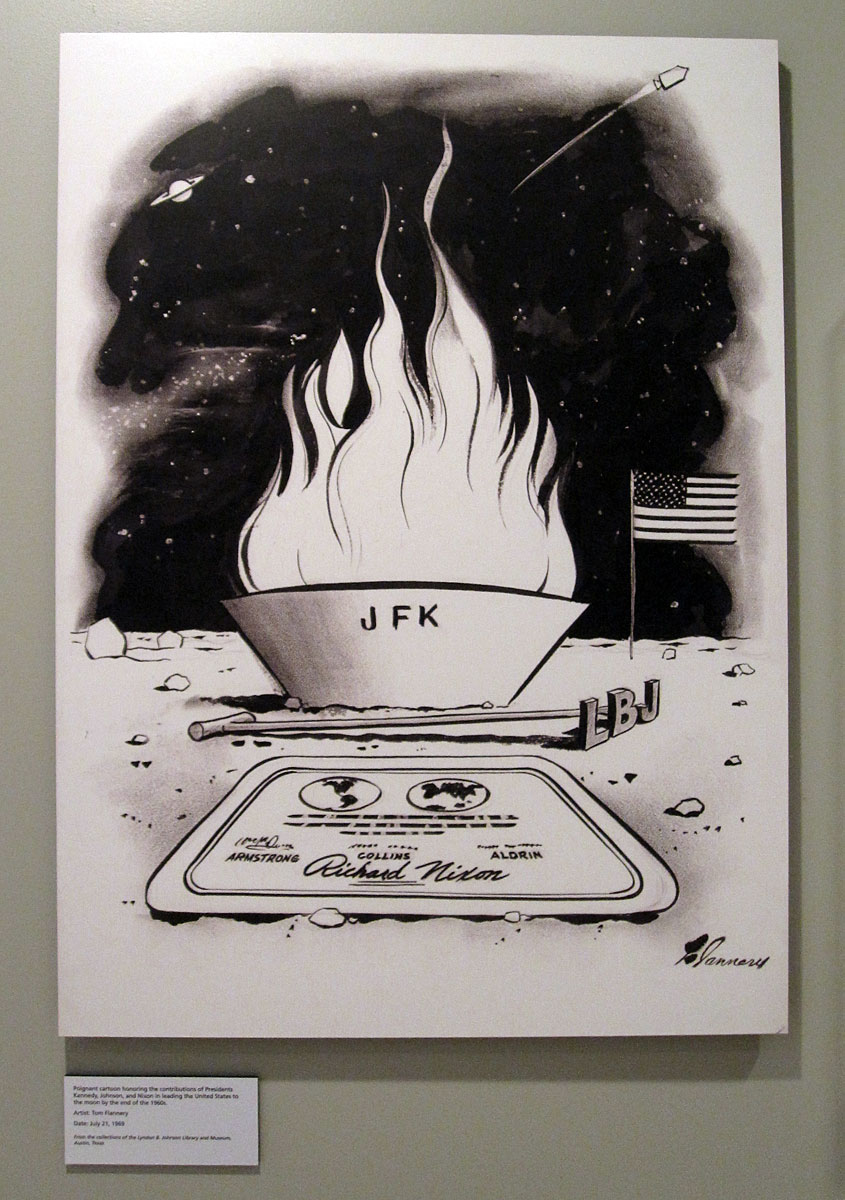
Political cartoon honoring the contributions of JFK and LBJ to the first moon landing
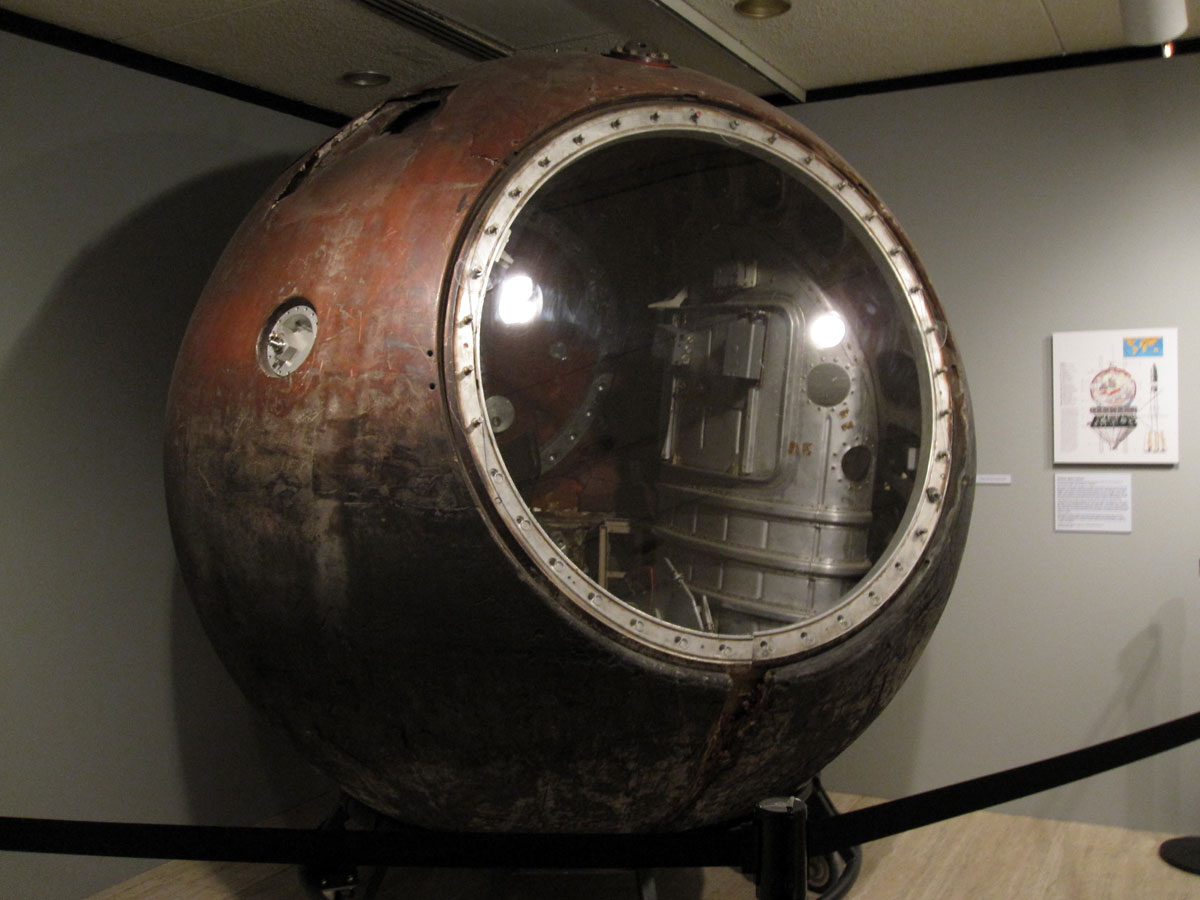
Picture of the Week #92
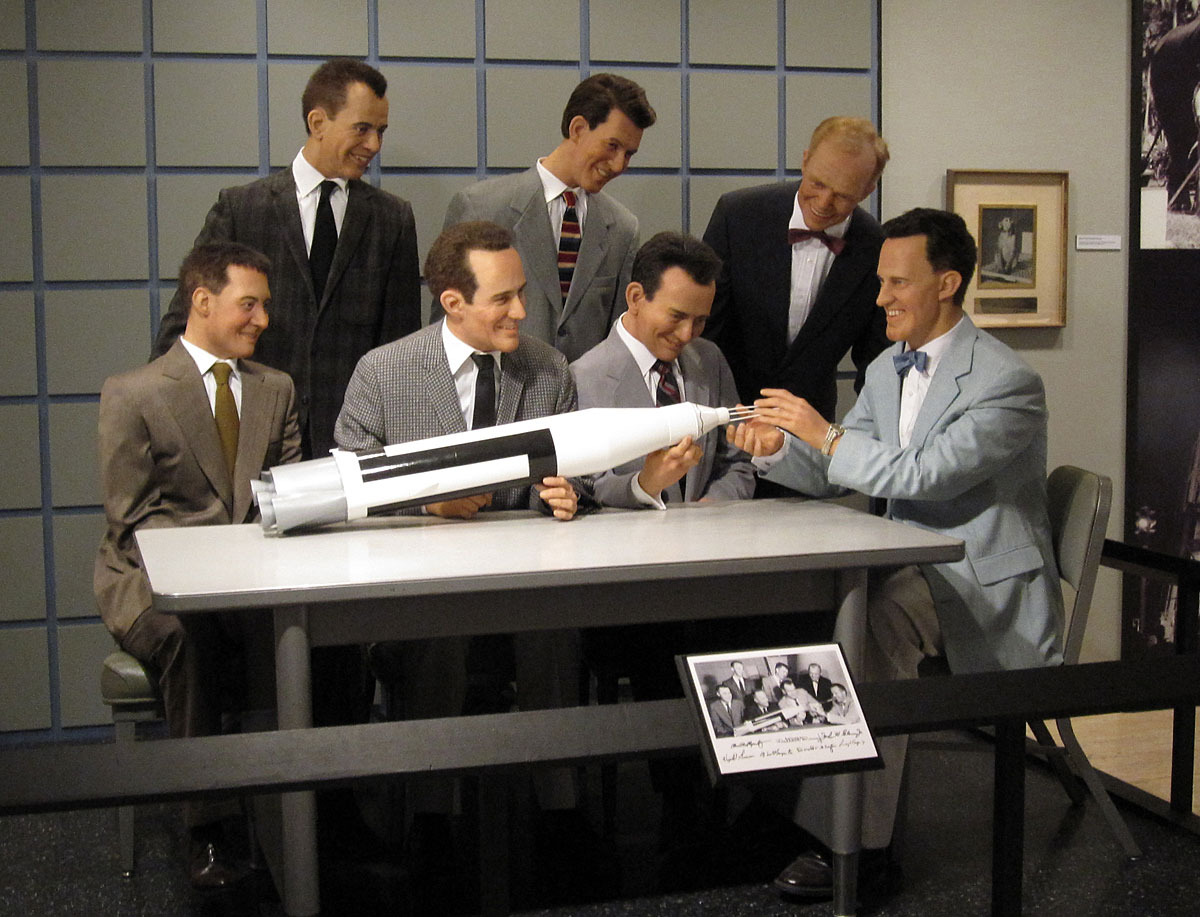
Recreation of a photo of the Mercury 7 astronauts. From the "To The Moon" exhibition, April 2009.
Picture of the Week #91
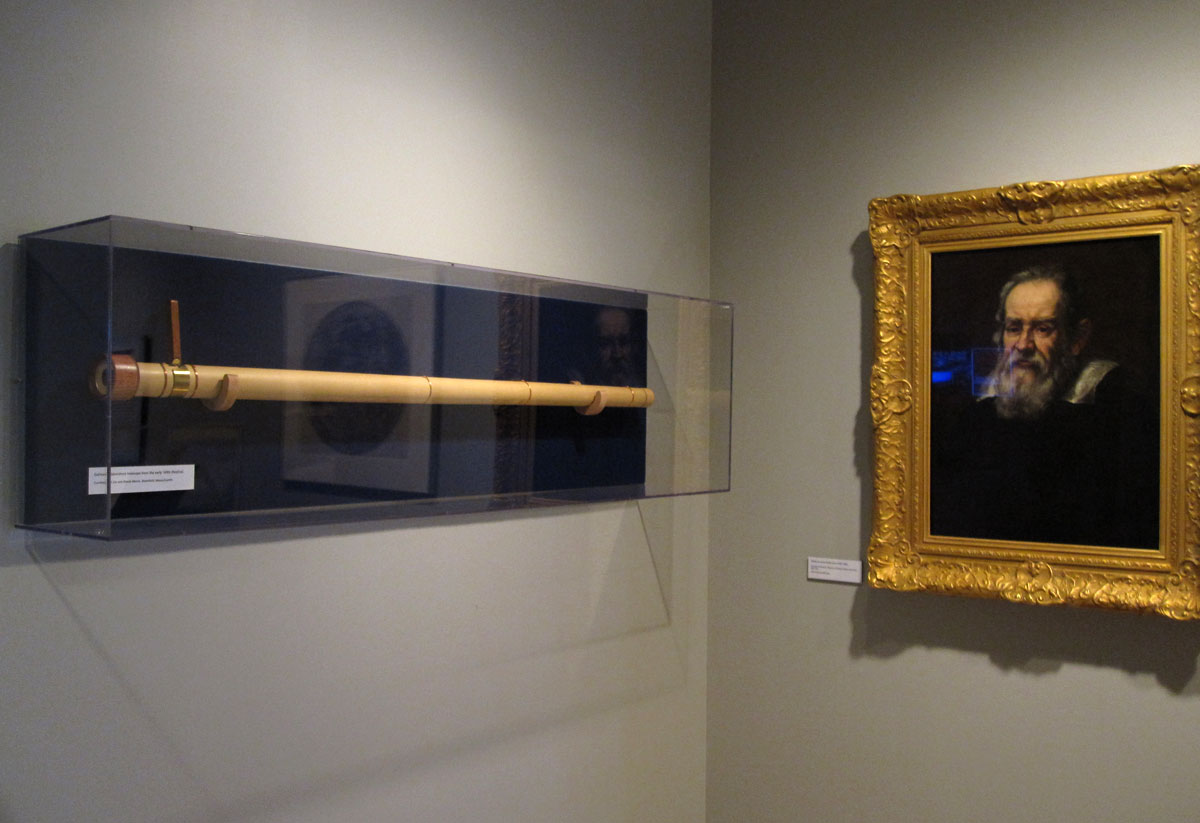
Painting of Galileo with a replica of one of his telescopes. From the "To The Moon" Exhibition, April 2009.
Picture of the Week #86
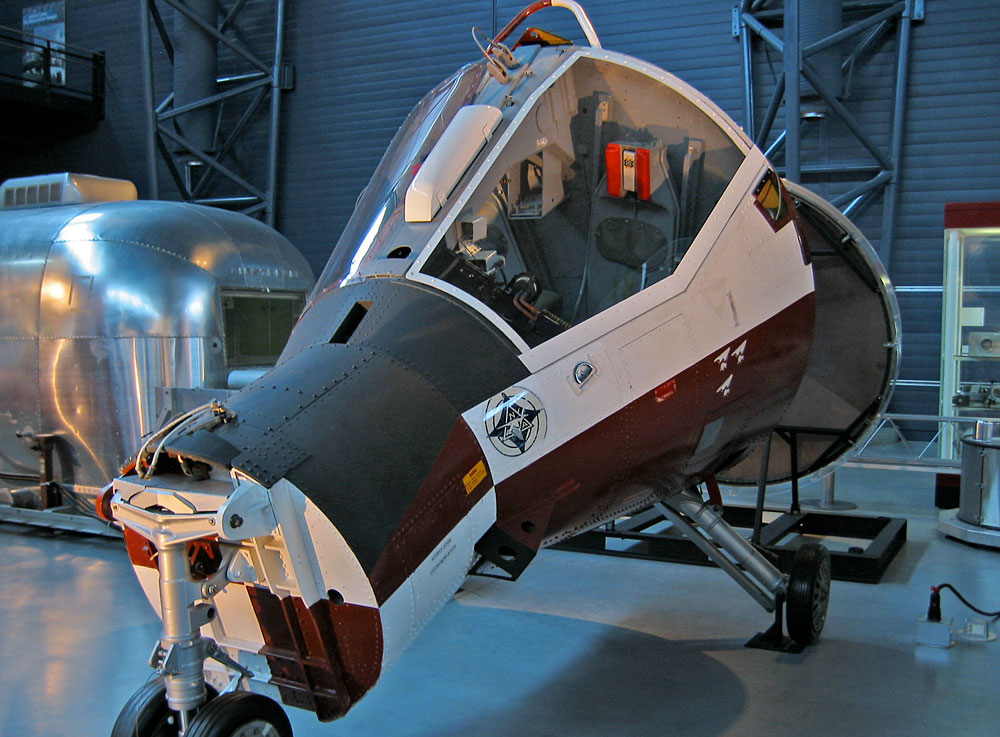
Gemini TTV-1 Paraglider Capsule at the National Air & Space Museum Udvar-Hazy Center. Photo September 2006.
From the information plaque:
At the start of the Gemini program in 1961, NASA considered having the two-astronaut Gemini capsule land on a runway after its return from space, rather than parachute into the ocean. The controlled descent and landing was to be accomplished by deploying an inflatable paraglider wing. However, NASA later decided to stick with the proven technology of parachutes and water landings.
This full-scale, piloted Test Tow Vehicle (TTV) was built to train Gemini astronauts for flight. It served as the first of two TTVs used to perfect maneuvering, control, and landing techniques. A helicopter released the TTV, with its wing deployed, over the dry lake bed at Edwards Air Force Base, California, where it landed.
Picture of the Week #85

Pan American World Airways Boeing 307 Stratoliner "Clipper Flying Cloud" at the National Air & Space Museum Udvar-Hazy Center. Photo September 2006.
According to the Boeing website, this plane was delivered to Boeing in 1940 and was the world's first pressurized commercial airliner.
Picture of the Week #84

Mammoth or mastodon at the American Museum of Natural History in NYC. (Sorry, can't tell them apart unless I can see the teeth!)
Picture of the Week #80

Renazzo carbonaceous chondrite meteorite at the Arthur Ross Hall of Meteorites in the American Museum of Natural History. Photo: August 2006.
Picture of the Week #78

Meteorite at American Museum of Natural History, Arthur Ross Hall of Meteorites. Photo: August 2006.
I think this might be a fragment from the Barringer Crater in Arizona, but unfortunately I don't have a good photo of the information plaque so I can't be sure.
Picture of the Week #76

Another ancient sea creature at the Academy of Natural Sciences Natural History Museum in Philadelphia. Photo August 2006.
Picture of the Week #75
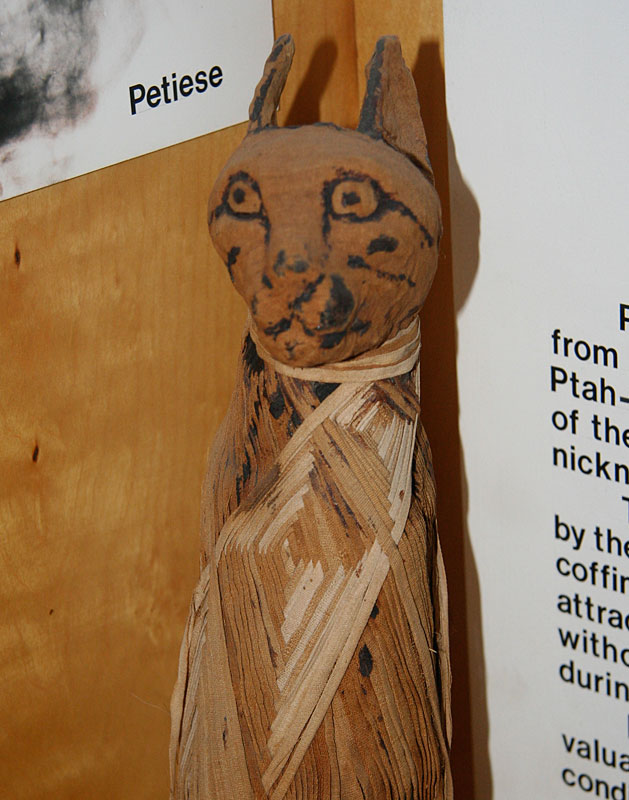
Egyptian cat mummy at the Academy of Natural Sciences Natural History Museum in Philadelphia. Photo August 2006.
Symphony of Science
Although I'm way late to the game with this, here is the newest offering in the Symphony of Science series - an incredible collection of music videos created from auto-tuned clips of famous scientists.
The three previous videos can be seen at Symphony of Science
The three previous videos can be seen at Symphony of Science
Picture of the Week #69
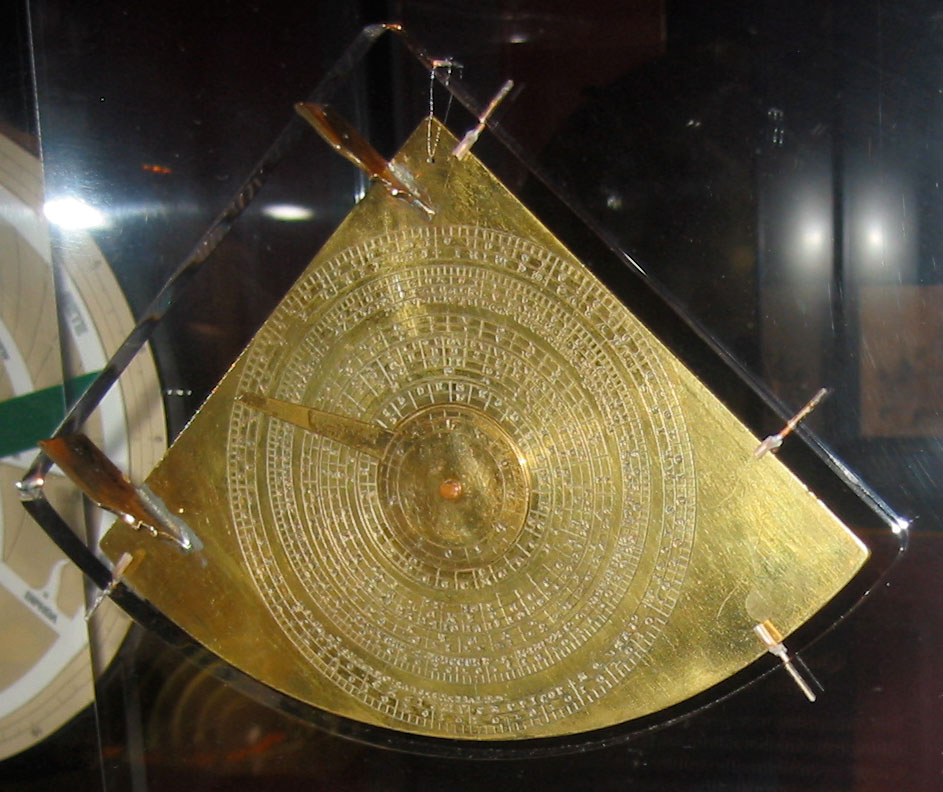
Quadrant Astrolabe, c. 1325 at the National Air and Space Museum (Downtown). Photo September 2006.
Picture of the Week #64

L to R: The Spirit of St. Louis, SpaceShip One and the Glamorous Glennis. Downtown Air and Space Museum, September 2006.
Subscribe to:
Posts (Atom)